
BEM!
La guida agli eventi di The Messineser per sapere cosa fare a Messina durante il weekend.

Come vi dicevo
di Alessandra Mammoliti
Come vi dicevo la scorsa settimana abbiamo conosciuto Eduardo durante lo Stretto Vinyl Fest, e mentre lo convincevamo a comprare qualche cartolina da spedire a Santiago del Cile, ci siamo fatti raccontare la sua storia:
“Ciao! Mi chiamo Eduardo e vengo da Santiago del Cile! Vivo fuori dal mio paese da 7 anni (e non ho ancora finito, ahah) e studio Sviluppo Locale a Padova, in Italia. Mi piace ascoltare ed essere ascoltato. Cerco sempre di tenermi occupato, creando o frequentando comunità ogni volta che mi trasferisco in un altro posto. Sono anche un giornalista e cerco di entrare in contatto con voi attraverso le mie esperienze in giro per il mondo”.
E adesso eccoci qui.
Buona lettura!
(su themessineser.it troverete - parlo con te Luisa! - anche la versione in spagnolo)
C’amu da fari Messina? Annamu e facìemu
A Messina ci vuole un’altra visione per creare più spazi per la comunità messinese
a cura di Eduardo Retamal
Where life breathes the mediterranean lifestyle, but also it stops its moving.
I had the honor to stay in Messina for a week, and enjoy their markets, their breakfasts, the infinity of their lunches and the lifestyle of the nightlife.
Messina was in my radar due to the construction of the famous bridge, a debate that I saw on the wall of Messina and its people.
Coming from Veneto as an international student from Chile, I was told that the south of Italy was this wild, frenetic spot where you have to be extra careful. As if I was going to another country. All these comments make you doubt your travel decisions, but everything was absolutely perfect as soon as I arrived on the island.
On my early arrival in Messina I had one of the best and most fulfilling breakfast I ever had: A freshly baked brioche with a pistachio granita with cream at Eden bar (on Via Corso Cavour) in the city center.
Because I didn’t have a car, and without the tram working in the city due maintenance and because I am travelling on a budget I decided to walk. Soon I realized the city was being taken by the cars, they have always the preference, so I had to browse on this ocean full of wheels.
But things were working well, the soul of this city is provided by their people, by being gentle, educated and most importantly I found people with time to interact and have a conversation.
The “ciao bello” stereotype was real and happening. People in the north of Italy are more money oriented, living there I felt every time I was doing something or talking with somebody it was because we had a monetary exchange happening.
Here in Messina I felt this wasn’t always the case. People always were willing to give me a bit of their time or just a smile back. This reminds me a lot of my life in Santiago in Chile. Where you see the streets full of life, constant movement and people just “ganándose la vida” (Earning a living) and heaps of great food (bis).
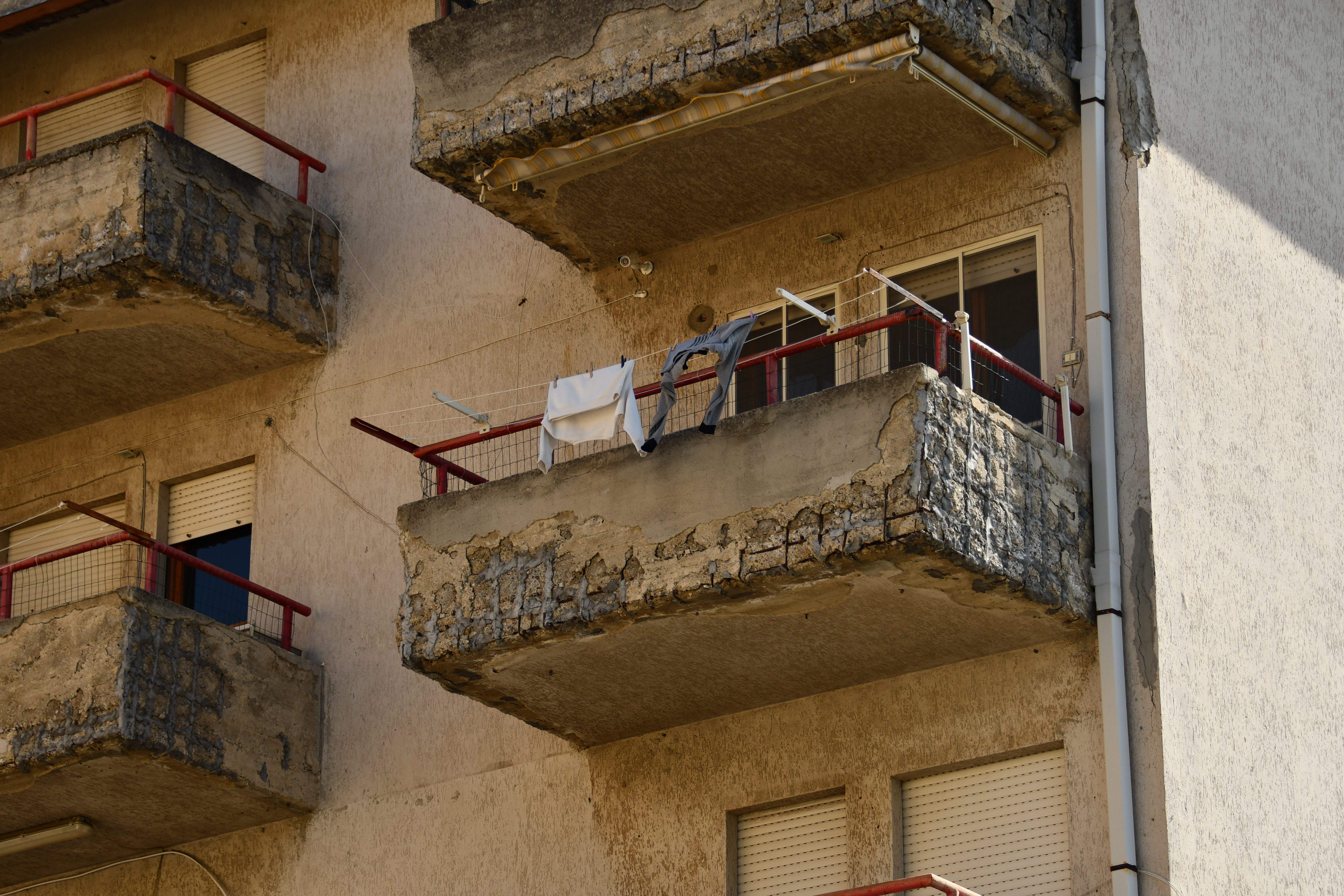
On the other hand, I found a city that has been frozen in time. A bit left behind. Just by walking and searching to arrive at the beach from the suburbs I saw plenty of abandoned buildings, train depots covered by rust or transformed into bus terminals. Beach access with trash on the side.
I had the feeling urban building was concentrated in the city center area, but as soon as you left this area, public funds were not arriving. It’s like having an electric car, but with a street not well maintained.
As an outsider I saw an excessive use of the car for not a big city. Due to the excessive use of cars, streets were in bad condition. I saw electric cars, but why do we need more electric cars if we have so many cars already? Do we need more parking spaces?
Despite this, Messina has done a great job respecting the public transportation with new electric buses and the tram that is being remodeled and it will be operating soon.
Another sign of change has been the creation of new bike lanes around the city, which helps to change this cultural use of the car in Messina, which is related with how the city was planned.
It’s important to mention that Messina was reconstructed after one of the most tragic earthquakes ever happened in Europe and in the world in 1908. It was one of the deadliest ever recorded in human history, around 100.000 people died and the reconstruction of the city was during a time that the use of the car was becoming a thing and the city structure was planned around this idea. This is different if we compare it with other cities like Padova in Veneto or Siena in Tuscany, where cars weren’t a thing when they were built.
Another thing I saw in Messina was the lack of social spaces with free access to different services or cultural experiences. In Messina there are so many empty buildings that could provide and be transformed into public spaces.
There are abandoned buildings that were linked with the mafia and today are not used. These areas could be transformed into spaces where inhabitants can do sports, go to museums, or they can organise socio-cultural activities to connect people with their territory. Events that could integrate people with other parts of the city.
The “Ex Macello”
A critical area, with a huge potential in Messina is the “Ex Macello” del waterfront della città.
This area had over 200.000 Euros destined to this space with money from the European Union, and even if people told me there were people working in this project, the area seemed to be totally abandoned and disconnected from the city.
Spaces like this could be used for cultural events, to show local and international artistic exhibitions. Becoming an emblem of Messina’s future.
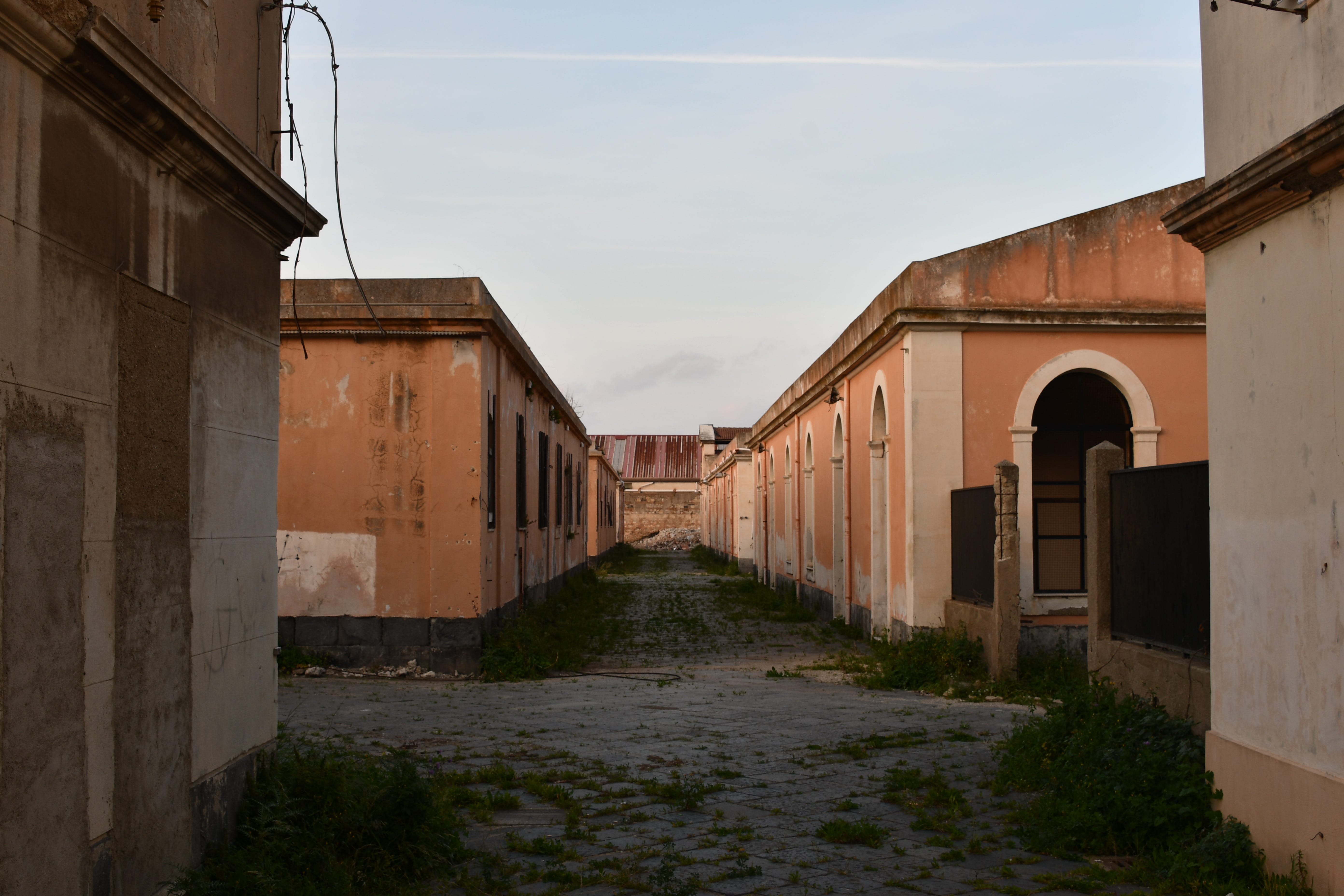
To see a space like this without the right use is such a shame because this space is not far from the train station and it could be a tourist attraction for the city.
Campo Libero George Floyd 8’46’’
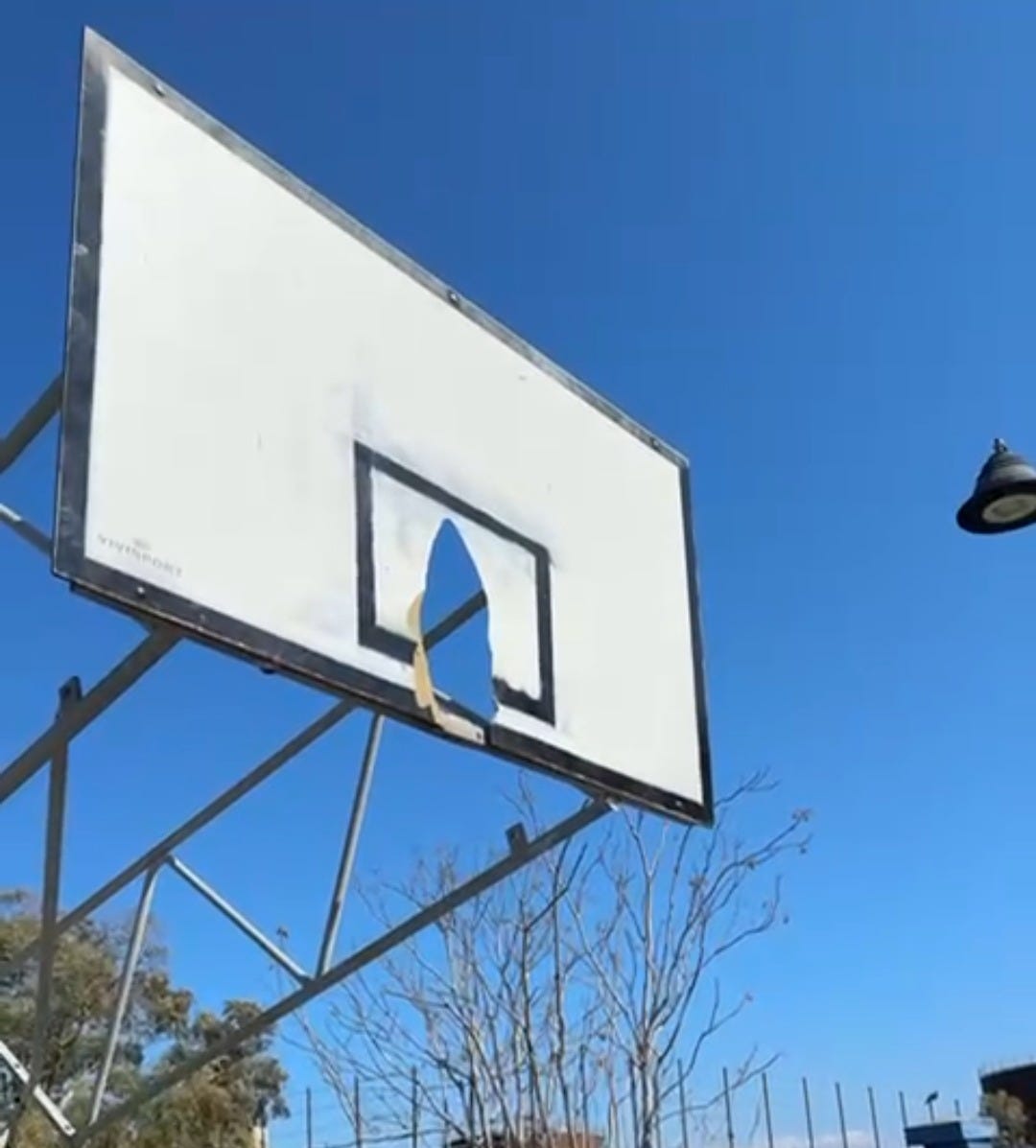
Another example of abandoned spaces is the basketball court on the continuation of this area, more precisely on Via San Raineri, next to the military zone of “Zona Falcata”. This court called “Campo Libero George Floyd 8’46’’” was a social project from the local basketball team ASD Amatori Basket Messina and Renato Accorinti, that offered an open sports field open to everyone, but that after the lack of maintenance and the bad weather and a strong tornado that hit the city, the court has been completely destroyed.
There are some local groups that have proposed other sportive projects, but it seems nobody cares about it. The money of the central government destined to repair the damage of this tornado is not arriving to the recovery of the public spaces being destroyed.
Elia Coltraro, ex player from ASD Amatori Basket Messina has mentioned that after the end of the concession the court was maintained only by single civilians, but this wasn’t enough to maintain it in good conditions. “A support to the people is needed to use spaces like this, where long plans are needed”, he agreed.
The beach on Don Blasco street
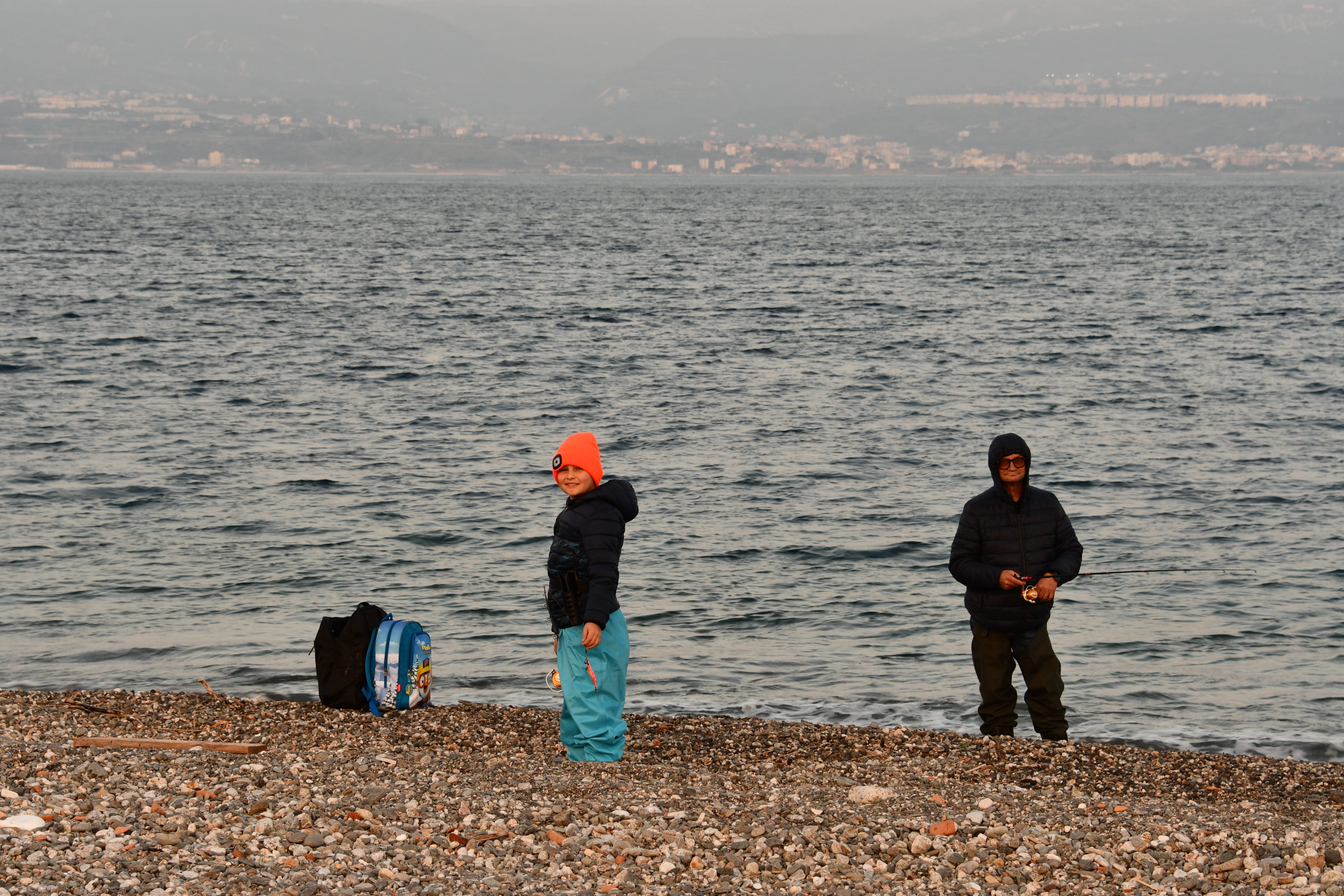
Another area that could be intervened is the beach that is located coming from the “ex Macello” on Don Blasco street. This zone is managed by the Italian Army, so it is out of Government control. Which creates a disconnected reality with the rest of the city. Besides this, I saw people fishing, having a great family time there. Just pure and non-touristic life.
The access to the beach in this area on Via Don Blasco is dirty and unclear. Here all the sewerage from part of Messina’s city center is being dropped to the sea. That’s why local people in Messina can’t take a bath on the sea in this area.
Here there’s the space to create a sports area and a bike lane across the sea, where people could enjoy the “bella vita” and hopefully create new economic areas for the city.
Abandoned old warehouses could be transformed into climbing gyms (that are nonexistent in Messina), or new public gyms, or a new lighting for the people to support their night runs or walks.
Regardless of this, you can see people coming here to take a walk and spend time with their families. It’s as if there were a silent call for this space to be put to another use.
I would like to come back to Messina in the future and see the life with a different eye, with the help of a working tram, a well and extended connection of the coast line, so people can do cycling or running activities across the city and enjoy the green areas of the city, as we have seen at Villa Dante, close to the cemetery.
The Bridge
Alongside the bridge construction (if constructed), the resources earmarked for this connection (13.5 Billions of Euros) could be used for other projects for the city of Messina.
The bridge is not going to solve the social tears of the society and won’t bring a better quality of life for their inhabitants. Instead it will motivate more cars to come into an already collapsed car related system, affecting one of the most beautiful areas of the city that is the “Pantano piccolo” near the “Torre Faro”.
Today in Messina there are groups like “Assemblea No Ponte” and “Invece del Ponte” that are currently promoting sustainable alternatives to infrastructure, such as upgrading existing maritime and rail links and improving safety in the region.
Elio Conti Nibali, from Invece del ponte argued that “development should not rely on symbolic projects but on concrete, proven measures”. Where big development projects should bring a “proper promotion and development of tourism”. Conti emphasised that “Sicily has the opportunity to make the SEZs (Special Economic Zones) work, but nothing is happening”.
Through a communication on Instagram, Assemblea No Ponte has emphasized that the funds designated for the bridge construction can be distributed into programs to help the population affected by cyclone Harry.
They also criticized the project, arguing that the discussion is not about the technicalities of the bridge. “From our perspective a bridge will have a devastating environmental impact in the zone with an enormous quantity of public resources for its construction”. Resources that should be designated “to give a positive response to the unmet needs of our communities”.
On the other hand, the movement Ponte Sullo Stretto di Messina has a different perspective, they agree this bridge will be the first of many projects that will be built. Adding that “meanwhile we continue discussing about it, one day this will be accepted as totally normal, and elsewhere bigger and more complex bridges will be built with less resources than Italy”
On recent news the Meloni government has rejected the €40 million Sicilian bill providing relief for businesses affected by Cyclone Harry, which was passed as a matter of urgency by the Regional Assembly on 27 January. The Schifani government and the majority are framing this as a ‘technical’ hold-up, but it comes at the end of a week of high tension following the victory of the ‘No’ vote in the referendum on justice.
Leaning two questions to Messina: What are we doing? And where are we heading?

🎹concerti
giovedì 9 aprile, alle 19.30, al Santuario San Francesco di Paola di Milazzo: Voci oltre i confini, con il Coro Calicantus, diretto da Mario Fontana, e con Simona Crociani al pianoforte;
giovedì 9 aprile, alle 21.00, al Rettorato per i Concerti d’Ateneo 2026: Andrea Cannata al pianoforte. Ingresso gratuito;
Continua a leggere con una prova gratuita di 7 giorni
Iscriviti a La newsletter di The Messineser per continuare a leggere questo post e ottenere 7 giorni di accesso gratuito agli archivi completi dei post.